SAVING THE EARTH FROM SPACE
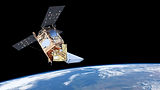
Sentinel-5P
What we Get (Data Products)
Sentinel-5P's data products are ready-to-use maps showing the concentrations of different gases:
Level -2 Products
These are the primary outputs. You get global maps that show the actual measured concentrations of each trace gas (e.g., NO2 concentrations in molecules per square centimeter) and aerosol/cloud properties
Each product comes as a file (often NetCDF) that includes the retrieved value, plus important information about its accuracy, quality, and location.
This data is available quickly (Near Real-Time) for air quality forecasting, and also as more thoroughly processed historical records.
How Does Sentinel-5P Work?
TROPOMI is a spectrometer. It looks at how sunlight is absorbed and scattered by different gases in the atmosphere:
-
Spectral Absorption: Every gas has a unique "fingerprint" in how it absorbs sunlight at different wavelengths. TROPOMI measures these absorption patterns very precisely across a wide range of ultraviolet, visible, and infrared light.
-
Sunlight Reflection/Emission: By analyzing these patterns and how much light returns to the satellite, scientists can calculate the amount of each gas present in the atmosphere.

What Would You Do with an Air Sniffer in Space?
Would you create an air health app?
Make art from pollution maps?
Build a better alert system?

Detects harmful gases like nitrogen dioxide (NO₂) from traffic and factories
AIR POLLUTION TRACKER
Follows smoke drifting across cities and countries
WILDFIRE SMOKE MONITOR

Shows how air quality travels across borders
GLOBAL AIR MONITOR

Helps cities plan for poor air days, asthma spikes, etc.
Health Alerts
Why do we need it?
What's Sentinel-5P?
Imagine a space detective that “sniffs” the air from space.
Sentinel-5P doesn’t take photos — it smells gases in the air and tells us what’s clean and what’s polluted.

What Gases Can It Detect?

-
NO₂ (Nitrogen Dioxide):
A reddish-brown gas that tells us how polluted the air is — especially in cities. It’s harmful to lungs.
Comes mostly from cars, buses, and factories burning fossil fuels like coal or oil. -
O₃ (Ozone)
This is not the “good” ozone that protects us from the sun — this is the “bad” kind that forms smog.
Created when pollution from vehicles and factories reacts with sunlight. -
CO (Carbon Monoxide)
A dangerous gas that has no color or smell. It can make people very sick or even be deadly.
Released by engines (like cars), wildfires, and anything burning without enough oxygen. -
CH₄ (Methane)
A powerful greenhouse gas — it traps heat in our atmosphere and contributes to climate change.
Comes from cow burps, garbage landfills, and leaking oil or gas pipelines. -
SO₂ (Sulfur Dioxide)
A gas that irritates eyes and lungs — and can cause acid rain.
Produced by volcanoes and factories that burn coal or oil. -
Aerosols
Tiny particles floating in the air — like smoke, dust, or pollution — that can make the sky hazy.
From deserts (dust), fires (smoke), pollution, and even sea spray or volcanoes.